

memory germinating: a maíz blessing

We planted cariaco amarillo in February. Just one mazorca—only a few kernels—tucked in alongside beans, calabasa, and santawana. It came from an ancient lineage, a hundreds-of-years-old mazorca tended by many hands across generations here in La Sabana. That day was luminous. Inspiration pulsed through the air as our friends, and all our babies, poured laughter, prayers, and sweat into the milpa.
There was a hum between us—recognition—swirling in the space, reaching to embrace the land, the mountains, the animals. A quiet affirmation: this doing is the doing that feeds the body and the spirit. This is the way back to meaning, to being here together with purpose.
Inside, I was holding the edges of my grief. My body had begun flaring again—something I believed I had risen through, healed, harvested all the lessons from. But as the season opened, so too did another descent, deeper into the underlayers of this dis-ease. I let my tears fall into that pocket of earth with the maíz, the beans, the calabasa—trusting the land could hold what I could not.
The beans did not sprout—just one. The calabasa gave more than we ever knew what to do with. The santawana was harvested in abundance, accompanying us like an elder who teaches through presence: the wisdom of limits, the necessity of boundaries.
I spent most of the year unable to be in the huerta—maybe four real days of honest tending. Between mothering, debilitating pain, and work, that is simply how life unfolded. So when October arrived and the corn was ready, I avoided it. I felt the weight of it—you reap what you sow—my sadness, frustration, the guilt of my absence.
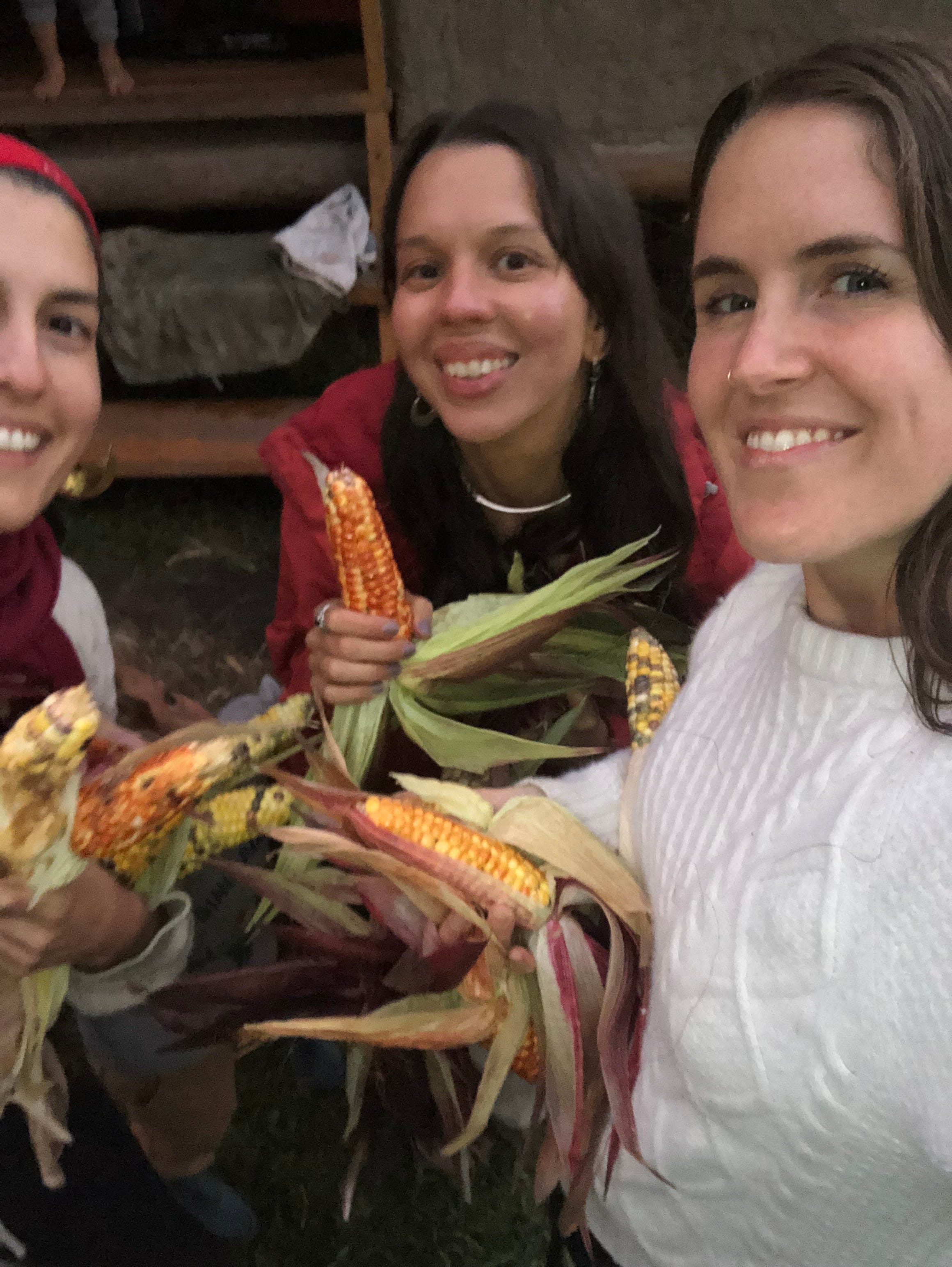
But then Senna and Yeni arrived, and something in their presence—and in following Alikai’s lead—opened me. We harvested the maíz. Alikai and Numa were elated, peeling back husks to reveal the colors hidden inside. Even the tiny, not-fully-formed mazorcas delighted them. And Yeni, Senna, and I fell into a soft, giggly, sensual joy as surprise after surprise emerged: deep reds, marbled purples, yellows, swirling oranges.
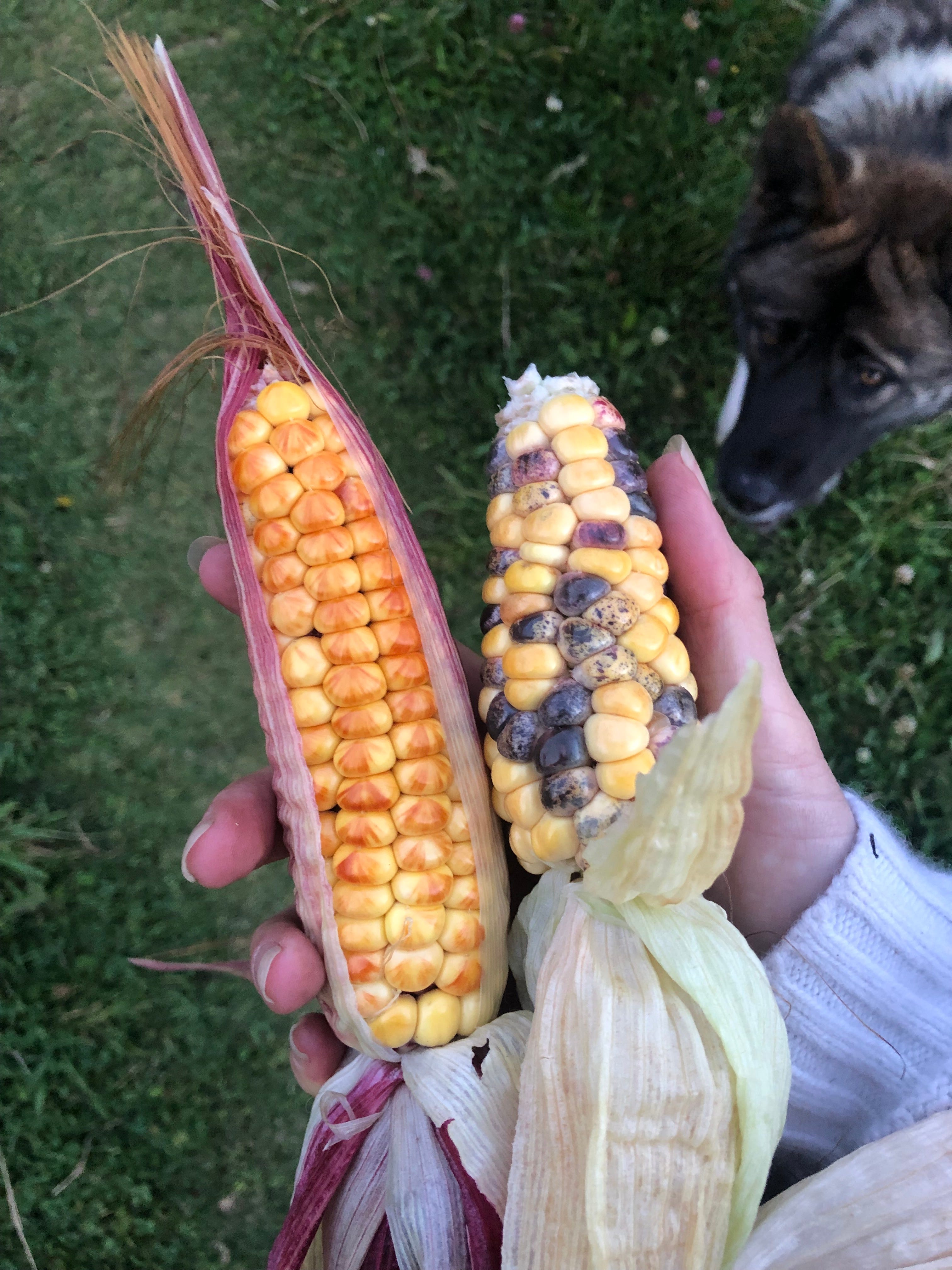
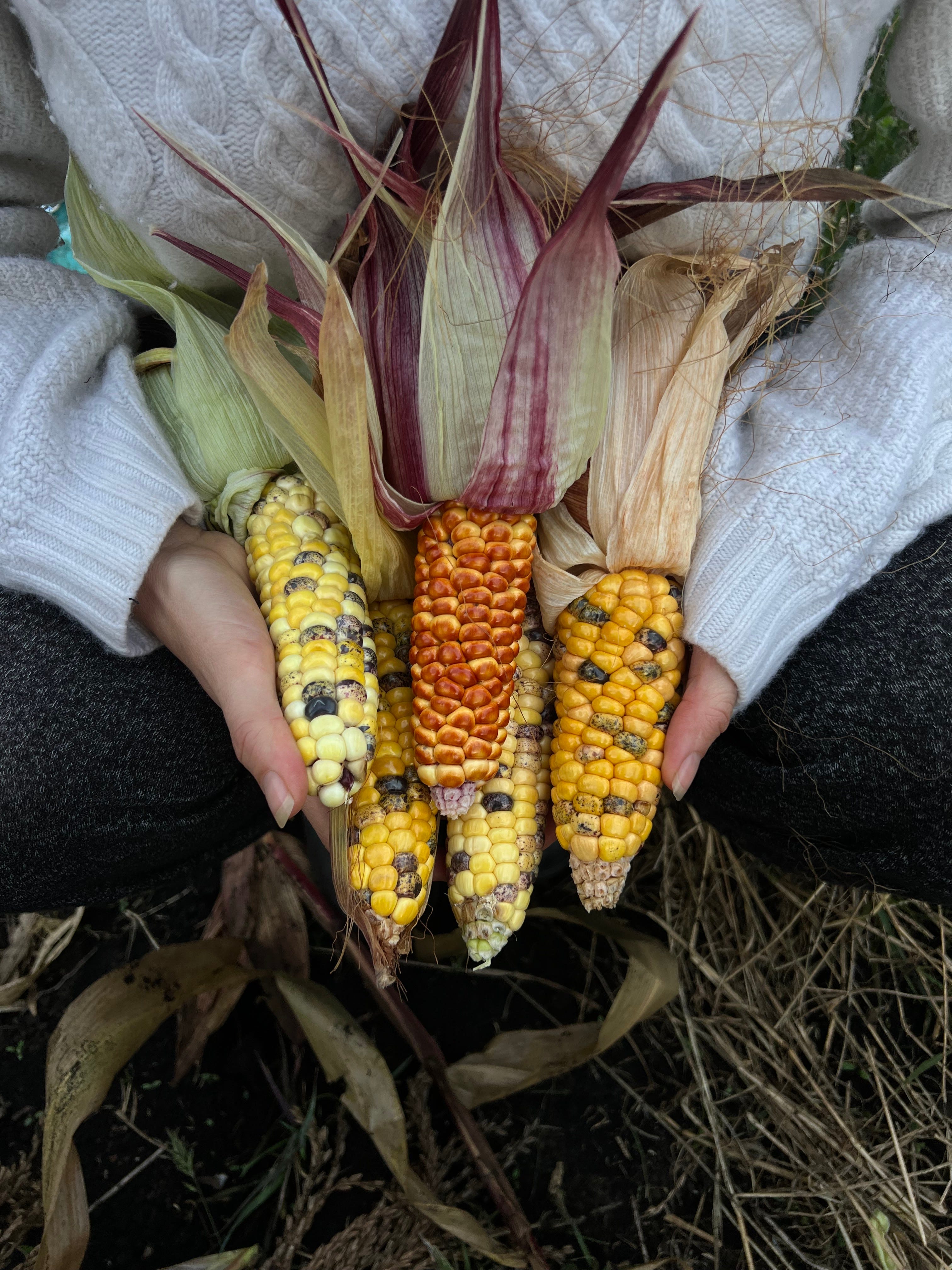
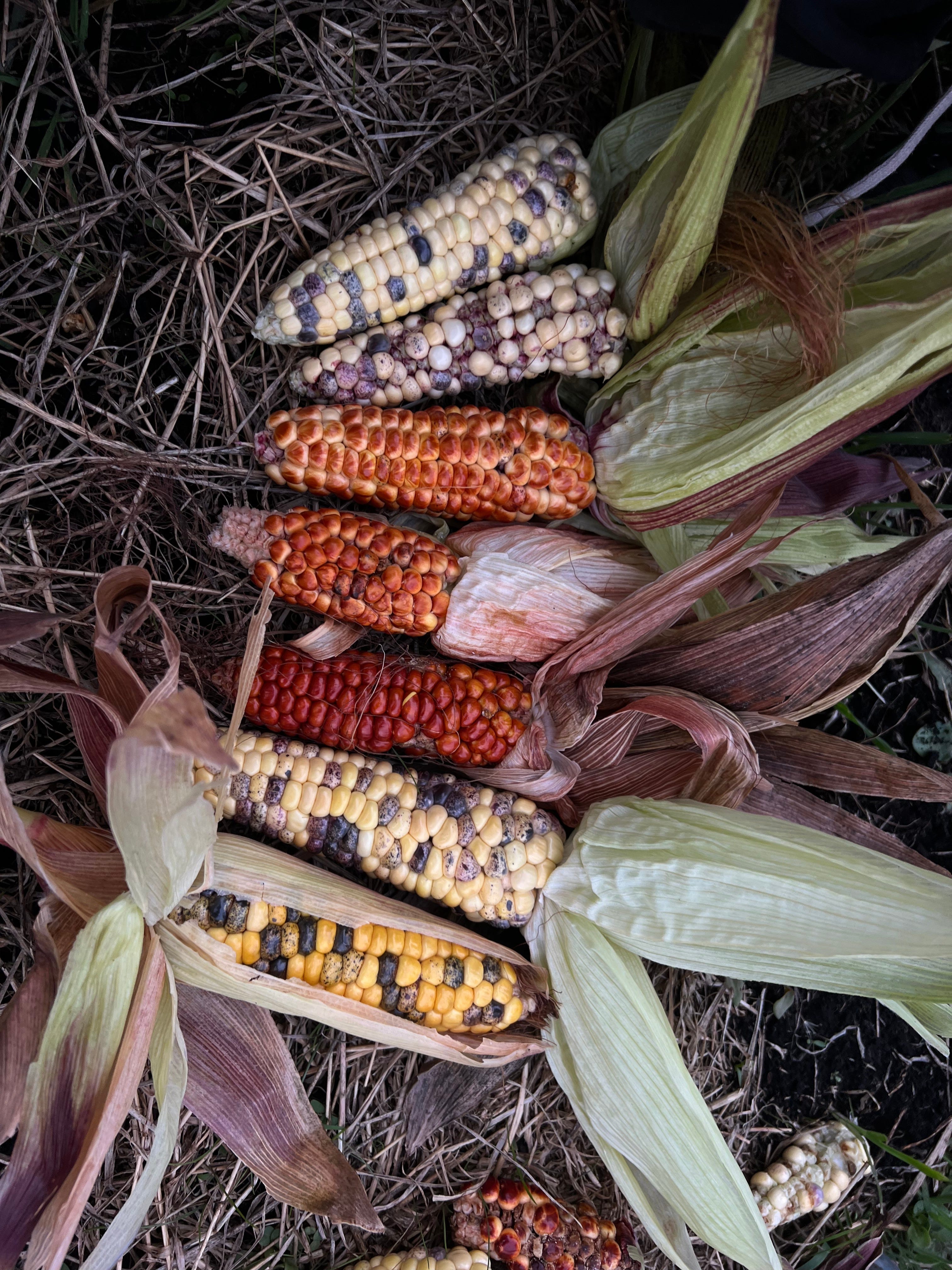
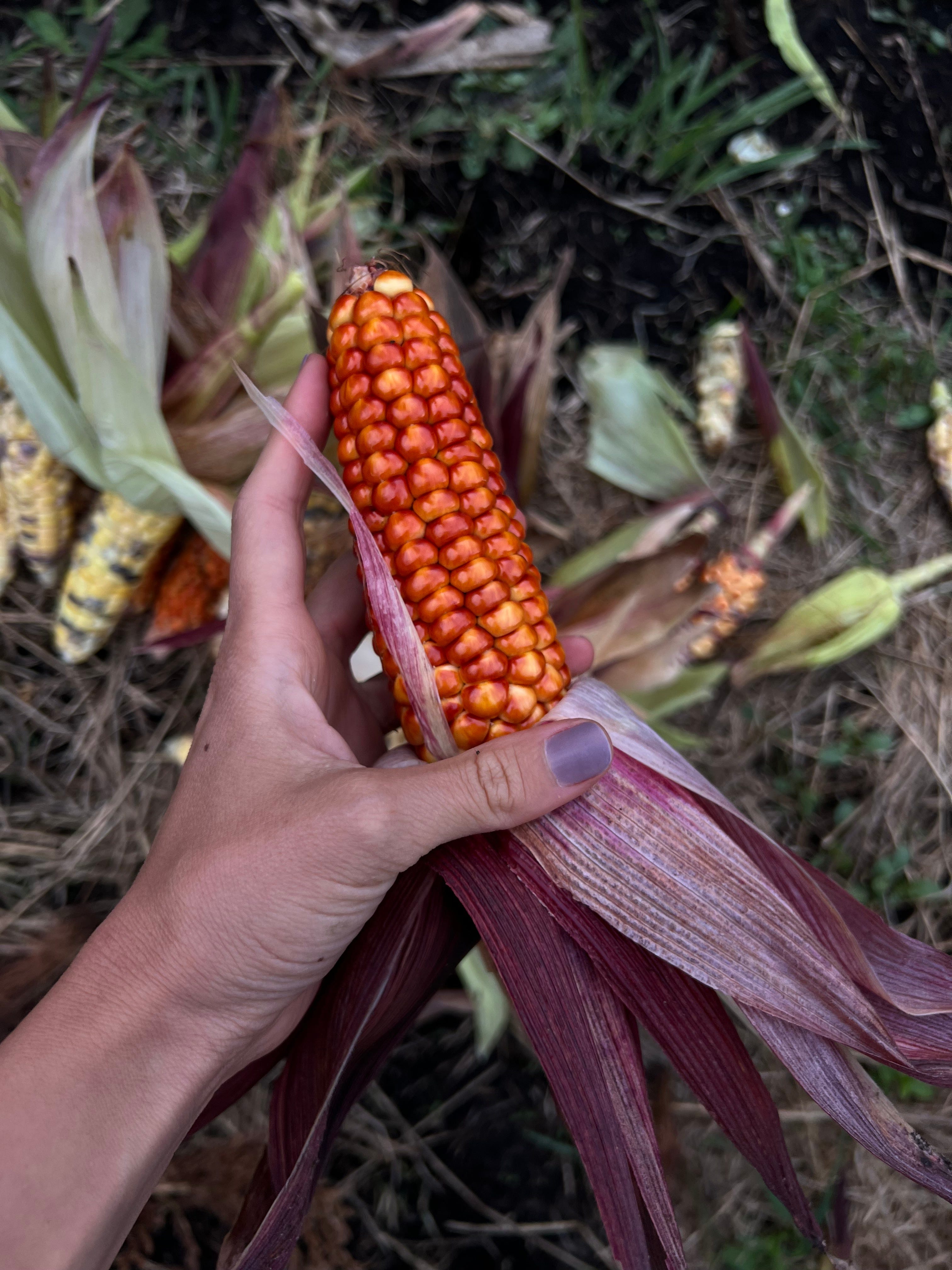
A revelation.
Because for kilometers around, all that is planted is cariaco amarillo. Cross-pollination, yes—but from where? And how did such majesty take root here, under my half-present tending, under a year marked by pain?
As I held those stunning mazorcas, I remembered that
